

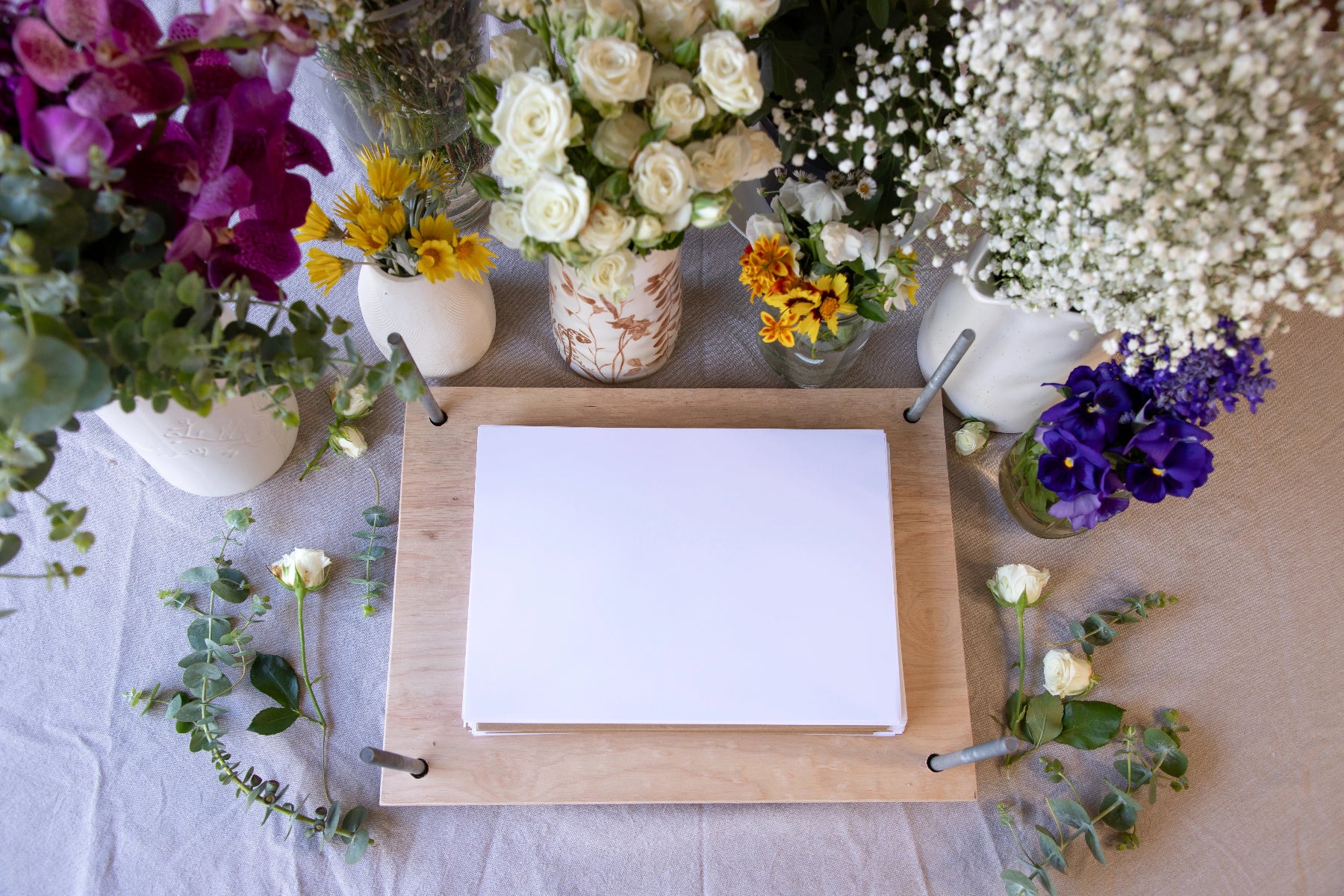
What actually goes into preserving your flowers
It's not paper towel and a stack of books. It's a slow, hands-on process that takes months, and every flower in your bouquet is treated a little differently. Here's what happens after you drop yours off.
Prepping Your Flowers
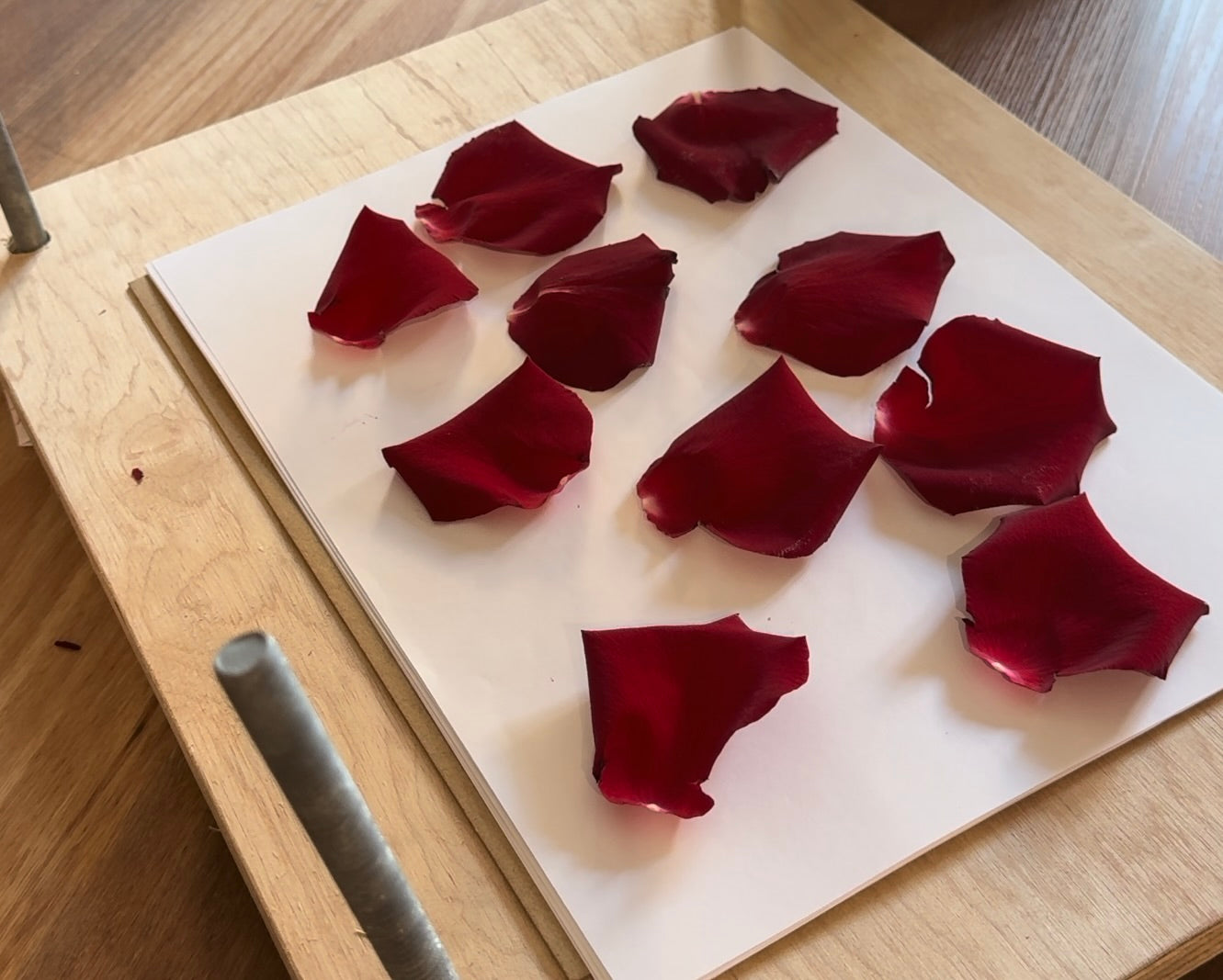
Depending on the flower, I'll pull each petal off and press them separately, or slice the flower in half lengthways for a side profile. Bulky flowers like snapdragons get fully deconstructed, stems halved, pollen removed where needed.
The trickier flowers need different absorption materials, for example, Orchids need blotting paper, while Lilies need bamboo sheets. Knowing exactly how to press each flower is necessary, otherwise they can brown, lose colour, and in the worst case - get mouldy.
Into the Press
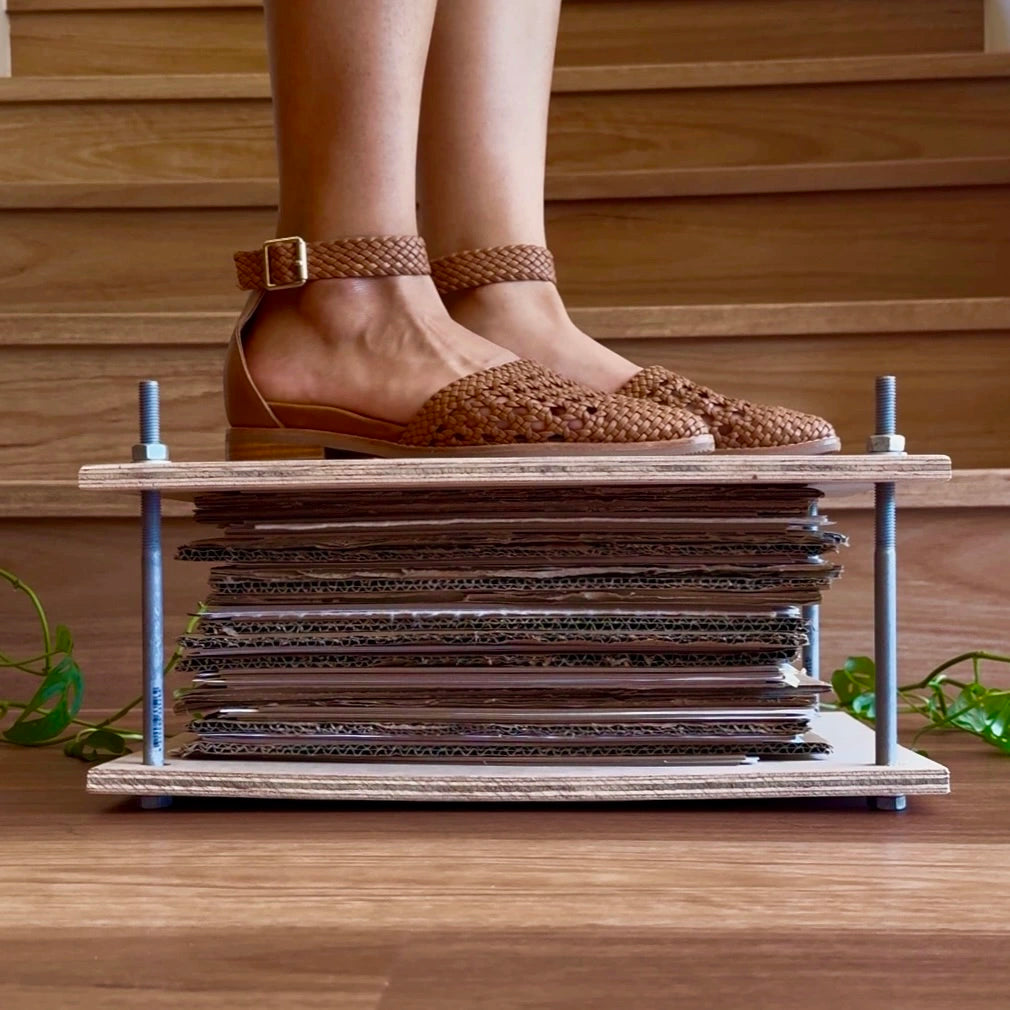
Once your flowers are prepped, they go into a professional flower press.
In my early days I tried the book method, the flowers lost their colour and shape immediately - you couldn't even tell what the flower was.
A professional press gives even, consistent pressure across every petal, and it's strong enough that I can stand on it to compress everything down. The result is drier flowers that maintain their colour and shape.
Changing the Papers
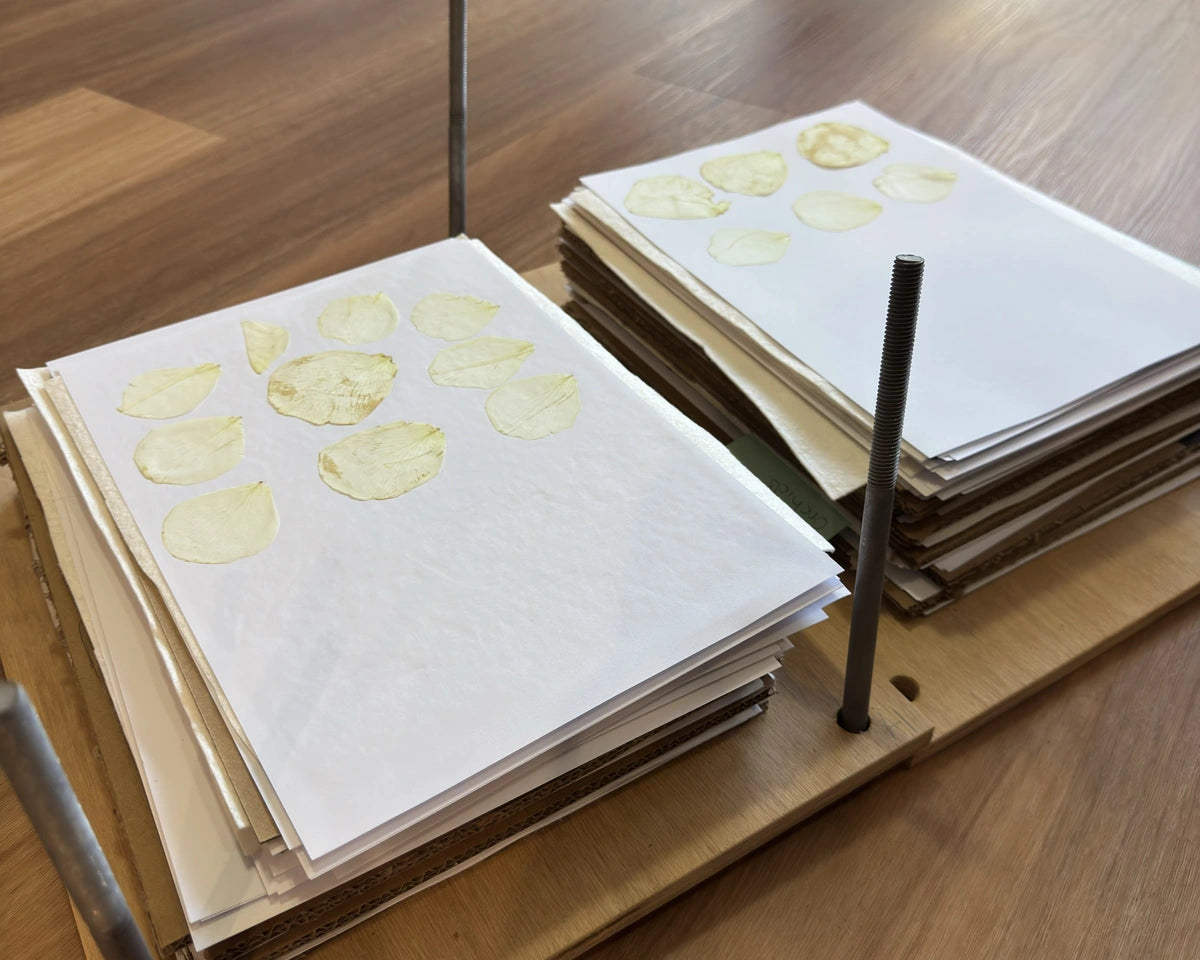
Once your flowers are in the press, the papers get changed by hand on a schedule that depends on the flower. High-moisture blooms like lilies and orchids get changed daily for the first 7 days, then sit in the press for another 8-10 weeks. Each round of paper changes can take up to an hour.
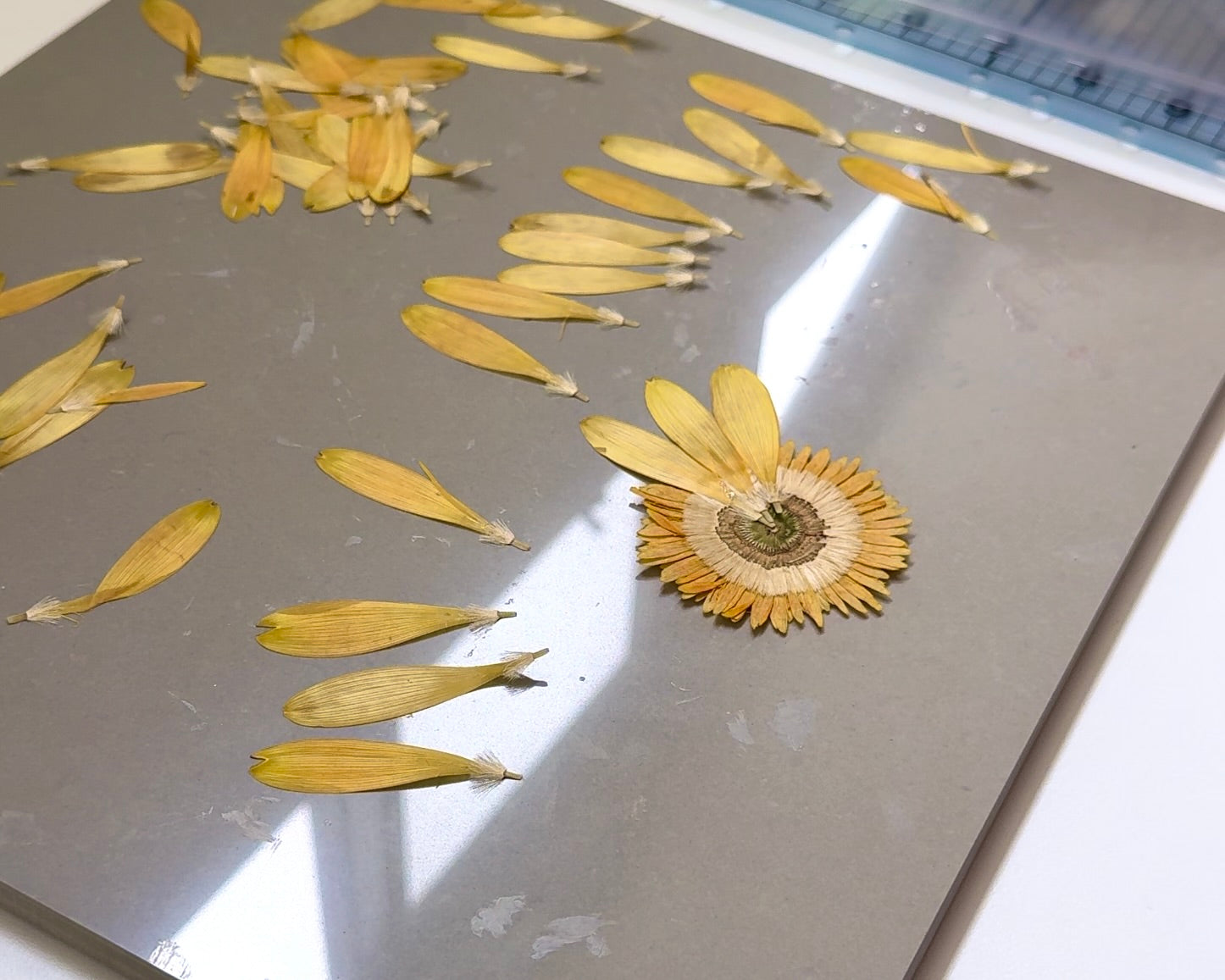
Reconstructing the Flowers
Some flowers, like roses and gerberas, get rebuilt petal by petal at the artwork stage. Their centres are too thick to press whole, so I press the petals separately and stick them back together one by one. It's slow work, but it's what keeps the flower looking like itself.
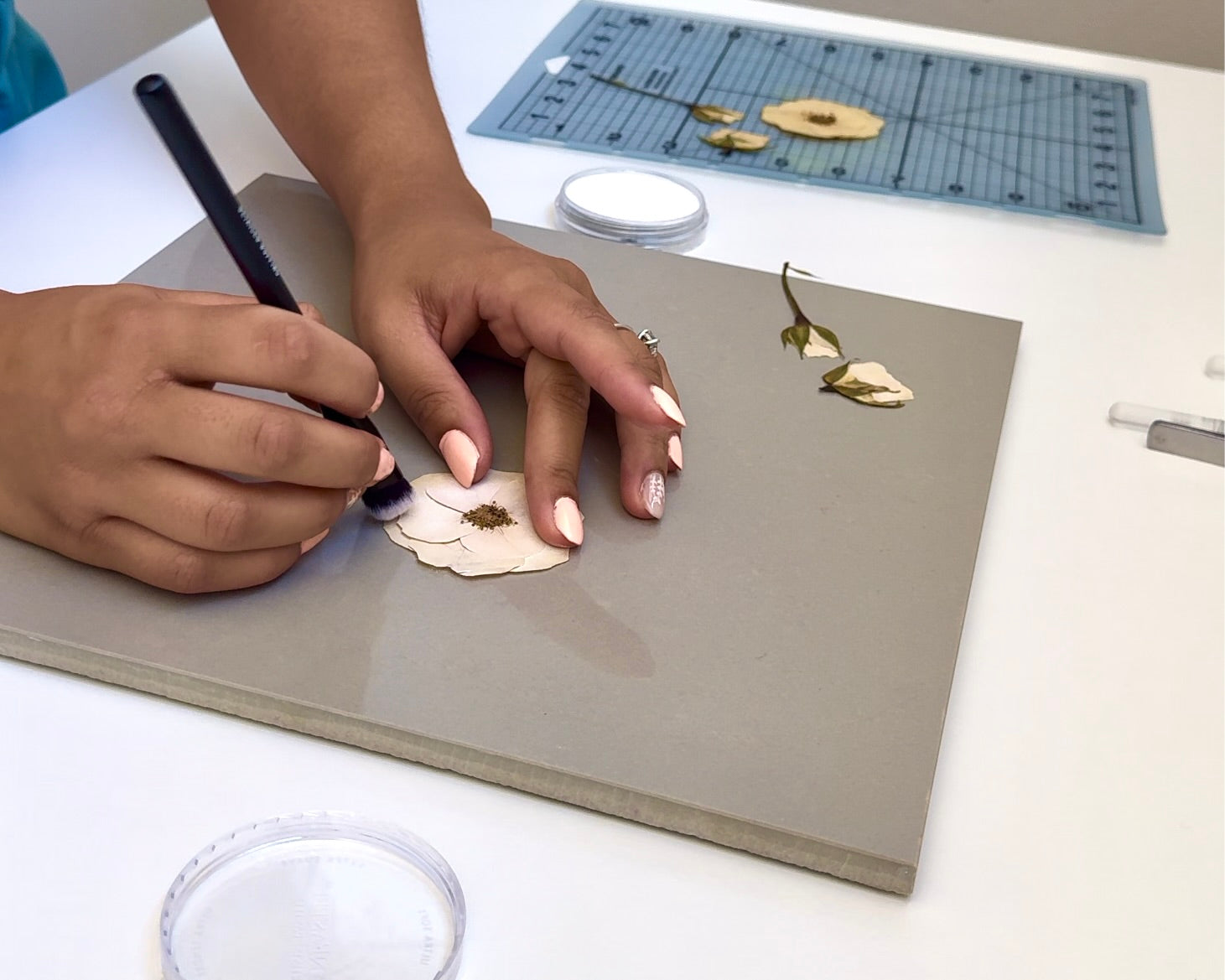
Colour Correcting
White flowers will always brown. I use Pan Pastels to brighten them up again - applied with the lightest brush over each petal, to bring back their brightness without painting over the delicate veining. Every frame also includes UV protection, though all pressed flowers will fade in colour over time.
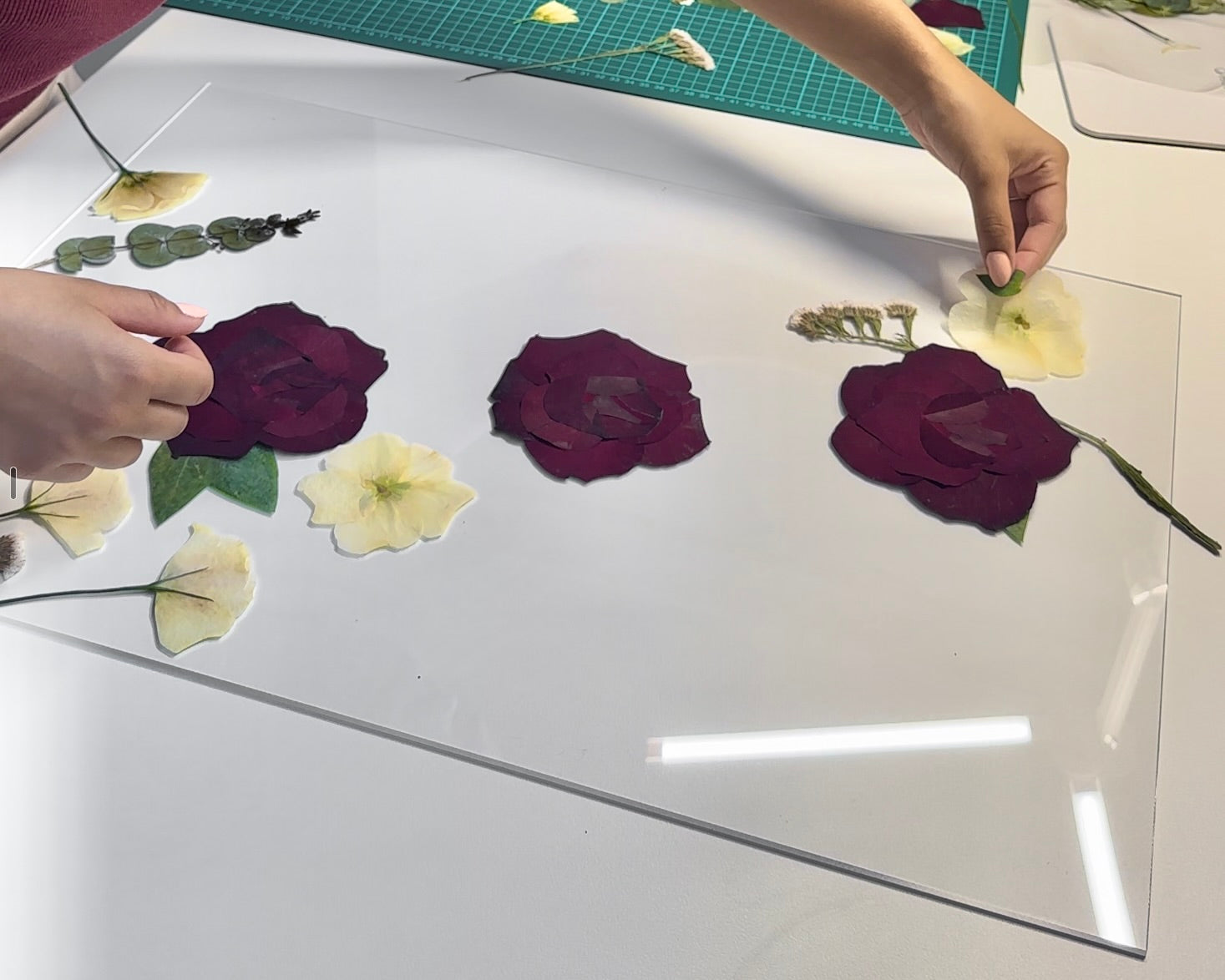
Designing Your Frame
The way I press your flowers depends on the design style you choose at drop-off. A Bouquet Recreation is pressed mostly front-on, keeping each flower as close to its original shape as possible. More artful styles use more side-profile flowers to create movement and flow. You can swap between artful styles after pressing, but it's not possible to switch between a Bouquet Recreation and an artful style once your flowers are in the press.
Once everything is pressed, I'll lay out a general design and send a photo through for your approval before anything is glued down. The finishing accents are left to my creative licence.
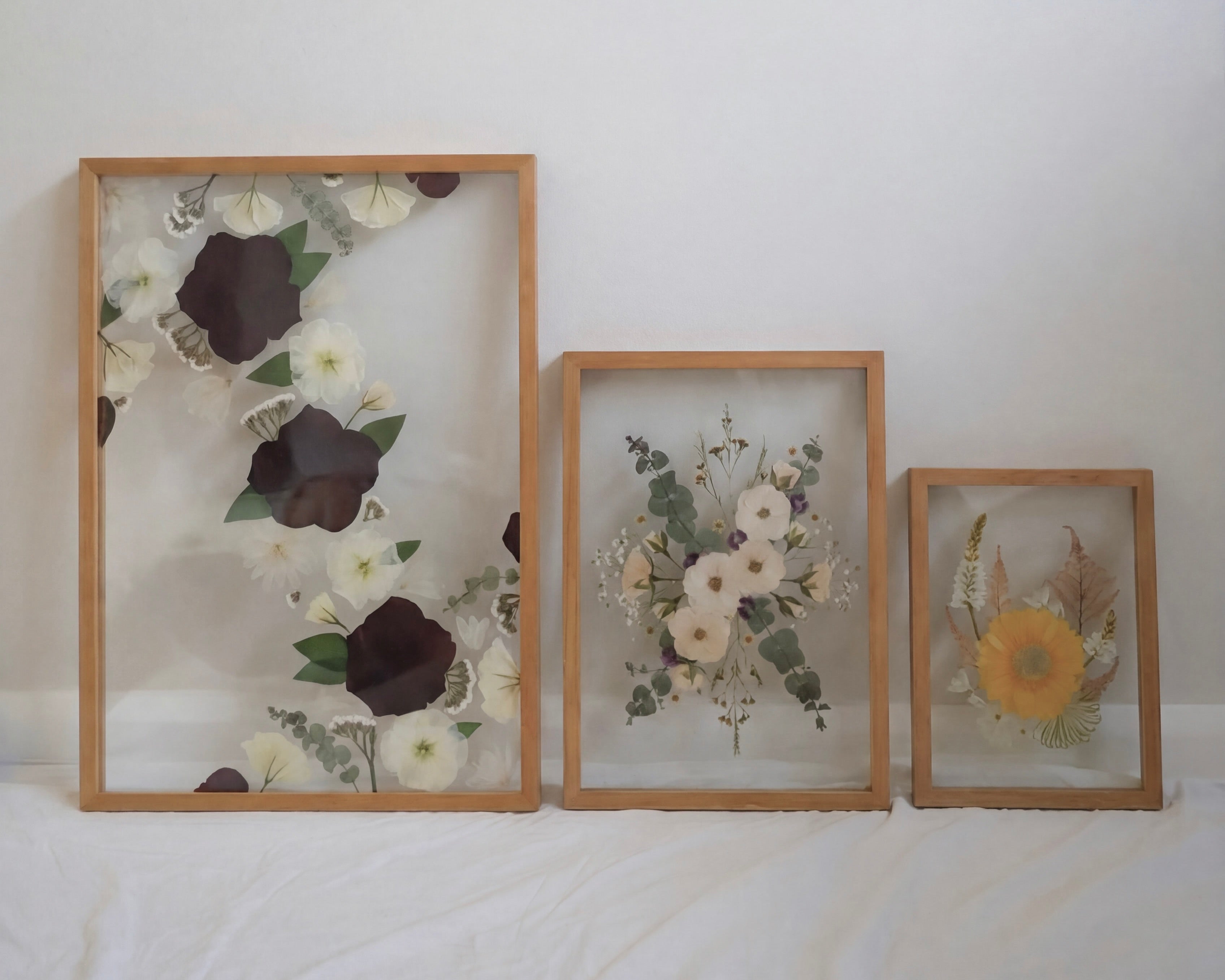
Framing & Delivery
Frames are custom ordered from a local Australian framer, and everything is glued with archival, acid-free glue so the petals stay protected over time. Once your piece is complete, Sydney clients are welcome to collect from the studio, or I can ship Australia-wide.
Order now to secure your spot
-
 A2 Custom Pressed Flower FrameA2 Custom Pressed Flower Frame
- Regular price
-
$850.00 - Regular price
-
- Sale price
-
$850.00
Quick view
-
 A3 Custom Pressed Flower FrameA3 Custom Pressed Flower Frame
- Regular price
-
$690.00 - Regular price
-
- Sale price
-
$690.00
Quick view
-
 A4 Custom Pressed Flower FrameA4 Custom Pressed Flower Frame
- Regular price
-
$400.00 - Regular price
-
- Sale price
-
$400.00
Quick view


Enquire Now
-
Contact US
erika@alwaysinbloom.com.au -
Follow us